
Photo by Kamil Kalkan on Unsplash
Maybe you’ve gone, or are going, grey — watching it arrive silver strand by silver strand — and somewhere along the way a quiet worry has taken hold.
Do my colours still work? Was my colour analysis done when I had different hair? Do I need to start again? Have I somehow become a different season?
These are completely understandable questions. Your hair is one of the most visible parts of your colouring, and watching it change can feel like the ground shifting slightly under something you thought you understood.
Here’s the good news. The answer is simpler — and more reassuring — than you might expect.
The short answer is no
Your undertone does not change. Ever. It is determined by the pigment in your skin — not by your hair colour, so grey hair does not change this. It may refine where you sit within your season. It will not move you to a completely different one or change your seasonal palette.
You are not suddenly a Winter if you were a Spring. You have not crossed some invisible line that makes your whole wardrobe wrong. What may have shifted is the specific sub-season that suits you best — and that’s a much smaller, more manageable change than it sounds.
What actually happens to your colouring as you go grey
As we age, our colouring tends to fade. Not just our hair — our skin tone softens, our eyebrows lighten, the contrast between our features gently reduces. It’s a gradual process, and for most women it happens slowly enough that they don’t notice it happening until they look back at a photo from ten years ago and see the difference.
Grey hair is often the most visible part of this shift, which is why it tends to get the focus. But the hair is really just the most obvious signal of something broader: your overall colouring is moving towards softer, more muted, lower contrast.
In colour analysis terms, what this usually means is a gentle drift within your season — from a deeper or warmer sub-type towards a lighter, softer or sometimes brighter one. So a Warm Spring may move towards True or Light Spring, and a Deep Winter may find that clearer colours start to work better for them than the deep tones they wore before.
Why some women feel washed out when they go grey
This is one of the most common things I hear — and it’s worth addressing directly, because the reason is usually not what women think.
When hair goes grey, the natural warmth, richness or depth that your previous hair colour was adding to your overall look softens or disappears. For some women, that hair colour was doing more work than they realised — adding contrast, depth or warmth that helped their existing palette sing.
Without it, colours that once looked vibrant can start to feel flat. Outfits that worked before look somehow off. The instinct is often to think grey hair doesn’t suit you. In most cases, that’s not the issue.
Usually it’s one of three things:
• Clothing colours that need slight adjustment to work with your updated colouring
• Makeup that hasn’t shifted to reflect the change in contrast
• An existing palette that was accurate then, but needs a gentle rerate now
Small tweaks often make a huge difference. The grey hair isn’t the problem — it’s the mismatch between your new colouring and your old assumptions.
How to spot when your palette needs a rethink
Not everyone needs to revisit their colour analysis after going grey. If your colouring has changed gradually and your colours still feel right — if you still look alive and like yourself in them — you may not need to do anything at all.
But there are some signs worth paying attention to:
• Colours that used to work beautifully now seem to drain you or create shadows around your face
• Your previous palette feels slightly ‘heavy’ or too intense against your current colouring
• You’ve noticed your skin looks flatter or more tired in colours you used to reach for
• Your hair colour has changed dramatically — either going grey quickly, or a significant colour change through dyeing
• You had your original analysis done years ago when your colouring was quite different
Any of these is a good reason to consider a rerate. Not because everything you know is wrong — but because getting the nuance right makes a significant difference to how you look and feel in your clothes.
What a colour rerate involves
A rerate is exactly what it sounds like — a fresh look at your colouring with new eyes, taking into account how you look now rather than how you looked when you were first analysed.
It’s not starting from scratch. Your undertone won’t have changed, so the broad seasonal territory is already established. We will always check this first, especially if your original analysis wasn’t with me. What a rerate does is refine your sub-season, update your palette, and re-identify your “wow” colours — the ones that make people say “you look amazing” when you walk in the room.
For many women, a rerate after going grey is genuinely revelatory. Grey hair, when it’s working with rather than against your palette, can be extraordinarily striking. Silver and white tones can add luminosity and lift in ways that coloured hair sometimes doesn’t. The women who look most magnificent with grey hair are usually the ones who’ve leant into the change and understand their updated palette.
Grey hair isn’t the end of your colour story. For a lot of women, it’s the beginning of a far more interesting one.
How grey hair affects each seasonal palette
Everyone’s colouring evolves differently. But there are some common shifts I see regularly — and knowing which direction your season tends to move can help you start making adjustments even before a rerate.
Springs
Many Springs move away from the very warmest camel and honey tones as they go grey, finding themselves looking fresher in clearer, lighter colours within the palette. Bright navy, dove grey, apple green or fresher pinks can suddenly feel more flattering than deeper warm tones. Some Springs also find that softer Spring shades become easier to wear than the brightest, most high-energy colours they once loved.
Summers
Summers often benefit from a little more light and freshness as contrast softens. If you’ve always worn deeper Summer shades like charcoal or burgundy, adding lighter tones near the face can make a significant difference. Some softer Summers find that slightly brighter Summer colours suddenly bring more life and energy back to their complexion than before.
Autumns
Many Autumns naturally move towards the softer end of the palette as they go grey. Rich earthy depth can start to feel a little heavy, whilst softer hazelnut, muted coral or lighter olive tones become more flattering. Some Autumns are surprised to find that brighter Autumn shades — colours they might have previously dismissed as too much — suddenly give them a healthy glow they didn’t need before.
Winters
For Winters, the biggest shift is often around contrast. Strong black and optic white can sometimes begin to feel too harsh, whilst navy, charcoal, silver or icy tones feel more balanced and elegant. Many Winters find that fresher, clearer colours bring them more brightness than the deepest, most dramatic shades they previously relied on. Silver grey, in particular, can be a spectacularly good colour on a Winter with grey hair.
Find the colours that work beautifully with your grey hair
Every woman’s palette is personal — which is why in-person analysis matters. Take time to review your wardrobe and see whether there are new and interesting colour combinations that work for you now that didn’t before.
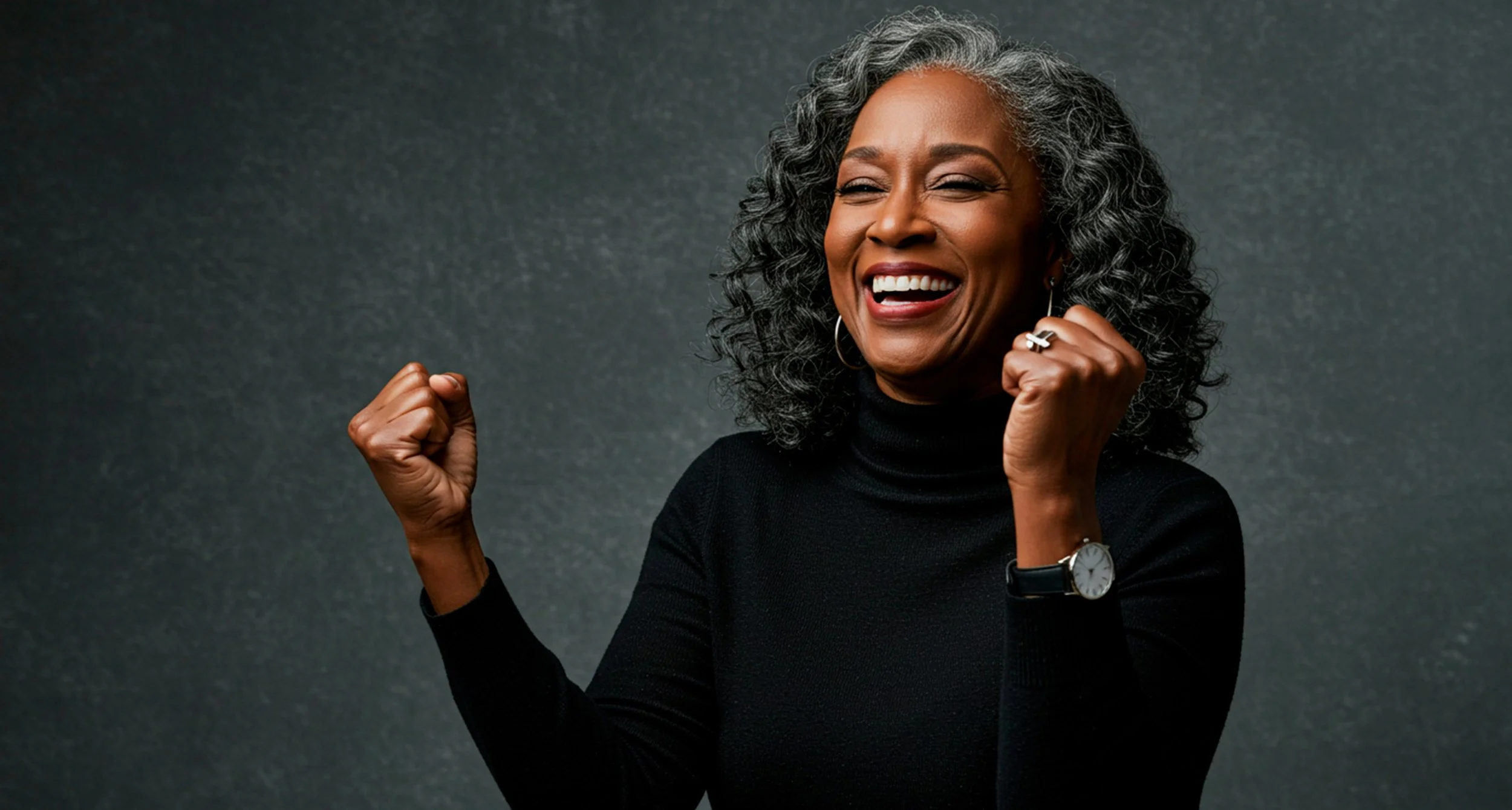
Photo by Eric Oliveira on Unsplash
And ignore the haters - don’t listen to advice like “wear bright colours to distract from grey hair.” This is one of those rules I’d put firmly in the bin. The goal is never distraction — it’s harmony. Colours that work with the beauty of your grey, not against it.
The most important thing to remember
Going grey is not a style emergency. It is not a reason to panic, throw out your wardrobe, or conclude that colour analysis no longer applies to you. And how you choose to adapt to it is your personal choice – I’d never tell you not to dye your hair but also will be there to help you embrace your new silvery tones and find those colours that bring you back into harmony.
So it may be a reason to revisit, refine and update. To get a fresh set of eyes on your colouring and re-establish where your home base is now. To find out which colours make the most of the way you look today — not the way you looked a decade ago.
And honestly? For many women, going grey becomes an opportunity to reconnect with themselves in a different way. To stop fighting who they are. To understand what genuinely makes them feel good now. Your best colours are still there — they may just need a small recalibration to find them again.
Your undertone hasn’t changed. Your season hasn’t changed. What may have shifted is where you sit most beautifully within it.
If your hair has changed significantly and you’re not sure whether your existing palette still serves you, a discovery call is the best place to start. We’ll talk through where you are and whether a rerate makes sense.
Read more in this series:
• Read first: What is colour analysis?
• Read before this: What are seasonal colour sub-types? (The 16 seasons explained)
• Follow along on Instagram for colour analysis content, style tips and a healthy dose of honest opinion
Emma Benjafield is a trained colour and style analyst working with midlife women across the UK. She uses the 16 sub-season method and works in person only for colour analysis consultations.